
Your vehicle has stopped, and the next steps feel unclear. Who should you call? What details should you share? Where should the vehicle go? Arranging vehicle recovery Essex motorists can rely on starts with a few practical details, not mechanical know-how.
It’s understandable to worry about how a broken-down, damaged or non-running vehicle will be moved safely. You may also be unsure whether to send it home, to a garage or somewhere else. HMD Recovery UK provides vehicle recovery and transport in Essex. Share where the vehicle is, what has happened, whether it starts or moves, and the destination you have in mind. These details help the team plan the collection.
This guide explains what to share when arranging recovery in Essex and how to choose a suitable destination. You’ll also learn how recovery can connect with garage repairs when the vehicle needs attention. A clear description of the situation helps make the next step more straightforward.
Key Takeaways
- Learn when a breakdown, collision or non-starting vehicle calls for recovery rather than continuing the journey.
- Find out what to share when arranging vehicle recovery Essex, from the vehicle’s condition to your location and preferred destination.
- Use a checklist to explain access and collection details clearly, while putting personal safety first.
- See how recovery can take a vehicle to a home, garage or another suitable location.
- Understand how HMD Recovery UK can move your vehicle and provide repairs where needed.
Vehicle recovery in Essex: when is it the right next step?
A vehicle that won’t start on a driveway, a car damaged in a collision or a breakdown during a journey can leave you unsure what to do next. If it cannot continue under its own power, or driving it could be unsafe, recovery can move it to a suitable destination.
Vehicle recovery is the safe movement of a stranded or damaged vehicle to a place where it can be dealt with. That may be your home, a garage or another location that suits the situation. The broad term covers different ways of moving vehicles, as outlined in this Vehicle recovery overview. For vehicle recovery Essex drivers need, the practical question is whether the vehicle should be transported rather than driven further.
When should you arrange vehicle recovery in Essex?
Arrange recovery if the vehicle will not start, has collision damage or cannot be driven safely. Don’t guess at the fault or assume the vehicle is roadworthy because it still moves. Put your safety and the vehicle’s condition first. When you arrange help, describe what happened and what you can see so the recovery team can plan the move.
Recovery, transport and repair: what is the difference?
Recovery moves a stranded or damaged vehicle from its current location to a chosen destination. Transport means moving a vehicle between places when it cannot travel under its own power, whether or not it has broken down. Repair is different: it involves diagnosing and fixing a vehicle issue. HMD Recovery UK provides recovery and transport, as well as vehicle repairs when needed.
Roadside assistance usually means help at the vehicle’s location, with the aim of getting it moving again. Recovery is the next step when the vehicle needs to be moved instead. Choose a destination based on what needs to happen next:
- Home: useful if you want to keep the vehicle at your address.
- Garage: practical when the vehicle needs attention or assessment.
- Another location: suitable when a different drop-off point better fits your plans.
You don’t need to know what caused the problem before arranging recovery. Describe what you can see and whether the vehicle starts or moves. That gives the team useful information to plan the collection. If the vehicle needs repairs, recovery can get it to a garage for attention.
How vehicle recovery in Essex works, from first call to drop-off
A clear request helps the recovery team understand what needs moving and where. For vehicle recovery Essex motorists can arrange, have the key facts ready: your location, the vehicle’s condition and your preferred destination. Clear details help the team plan the collection.
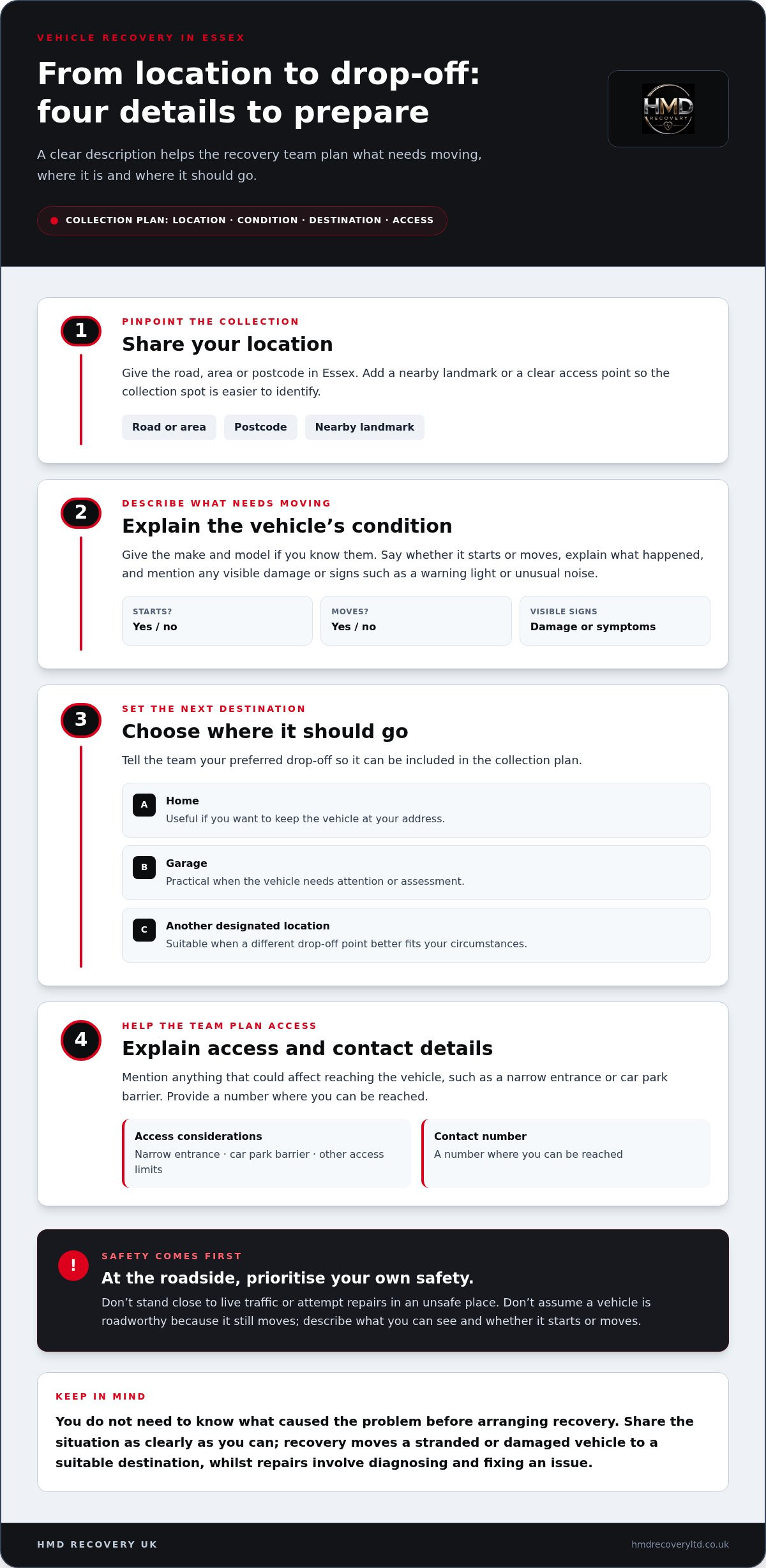
The arrangements depend on the situation. Use these four steps to prepare for the conversation:
- Share your location. Give the road, area or postcode in Essex. Add a nearby landmark or a clear access point to make the collection spot easier to identify.
- Describe the vehicle. Give its make and model if you know them, and say whether it starts, moves or has visible damage.
- Choose a destination. Say whether you’d like the vehicle taken home, to a garage or to another designated location.
- Explain access and contact details. Mention anything that could affect reaching the vehicle and provide a number where you can be reached.
What details help arrange vehicle recovery?
Be as precise as you can. Explain what happened, whether the vehicle can move and anything that could affect access, such as a narrow entrance or car park barrier. Give the clearest location you can, with a nearby landmark if useful, and share a contact number. These details help the team plan the collection.
If you’re at the roadside, prioritise your own safety. Don’t stand close to live traffic or attempt repairs in an unsafe place. The GOV.UK guide to vehicle recovery regulations covers safety rules for recovery businesses, including drivers and vehicles.
Where can a recovered vehicle be taken?
Choose a destination that fits what you need next. Home may suit a vehicle you want to keep nearby. A garage is a practical choice if it needs attention, while another designated location may work better for your circumstances. Tell the team your preference when arranging recovery so the destination can be included in the plan.
HMD Recovery UK provides vehicle recovery and transport to homes, garages and other designated locations. If you need to move a stranded vehicle, arrange vehicle recovery with HMD and share the details that will help plan its collection.
Breakdown, accident or non-runner: choosing recovery in Essex
The collection plan depends on more than why the vehicle stopped. Its condition, how easily it can be accessed and where you want it taken all matter. Use the table to identify the details to share when arranging vehicle recovery Essex.
| Situation | Useful next step |
|---|---|
| Breakdown | Explain what happened, whether the vehicle starts or moves, and any visible signs such as a warning light or unusual noise. Consider home or a garage as the destination. |
| Collision damage | Describe the damage you can see and whether the vehicle is obstructing access. Don’t assume it’s safe to drive; arrange for it to be moved to a suitable location. |
| Non-runner or vehicle that will not roll | Say clearly that it won’t start or move, and mention any access limits around it. These details help the team plan the collection. |
What if your vehicle has broken down?
If it won’t restart, recovery may be a practical way to get it home or to a garage. Describe what you noticed before it stopped, such as a warning light or loss of power, without trying to diagnose the cause. Don’t keep attempting to drive if you’re concerned about safety. If you’re roadside, prioritise getting yourself away from traffic when it’s safe to do so, and don’t attempt repairs in a dangerous position.
What if the vehicle is damaged or will not roll?
After a collision, tell the recovery team what parts appear damaged and whether the wheels can move. If the vehicle is stuck in a tight space, behind a barrier or on an awkward approach, explain that too. A damaged vehicle that won’t roll may need different collection planning from one that can move. Describe its condition rather than assuming it is roadworthy or repairable.
Be specific, even if you’re unsure about the mechanical details. “The engine turns over but won’t start” or “the front wheel looks damaged and the car won’t move” is more useful than a guessed diagnosis. Add your location and preferred drop-off point. HMD Recovery UK transports broken-down, accident-damaged and non-running vehicles to a home, garage or another designated location. The details you provide help the team plan for the vehicle and the access at the collection point.
Getting ready for vehicle recovery in Essex: safety and access
A few clear details help the collection team plan. Before vehicle recovery in Essex, think about your safety first, then share the vehicle’s exact location, condition and any access issues. You don’t need to diagnose a fault. A simple description of what you can see and whether the vehicle moves is useful.
What should you do while waiting for recovery?
Choose the safest place you can reach without putting yourself at risk. Don’t stand beside live traffic or attempt repairs in an unsafe location. The right action depends on the road and what is happening around you, so follow the current Highway Code guidance for your circumstances. Take extra care on motorways and follow directions from the relevant authorities.
If you can’t move to a safer place without crossing traffic or exposing yourself to danger, don’t take that risk. Focus on staying safe and explain your position clearly when arranging help.
How can you make collection easier?
Use this checklist when sharing information with the recovery team:
- Collection point: Give the road name, nearby landmark or other clear location details. If relevant, include which direction you’re travelling.
- Access: Mention barriers, height limits, restricted entrances, narrow spaces or anything else that could affect reaching the vehicle.
- Vehicle condition: Explain whether it starts or moves, and describe any visible damage. Don’t guess at the cause.
- Contact details: Provide a phone number where you can be reached. Let the team know if your location changes.
- Drop-off: State whether you’d prefer the vehicle to go to your home, a garage or another designated location.
Keep essential documents and personal belongings separate if the vehicle is being moved. That makes it easier to take what you need without returning to the vehicle later. If its position or condition changes before collection, pass on the update. Even a small change, such as moving the vehicle to a nearby entrance, can help avoid confusion about where to meet.
Clear information helps make collection more organised. If you need help moving a broken-down, damaged or non-running vehicle, arrange vehicle recovery with HMD.
Arrange vehicle recovery in Essex with HMD Recovery UK
A breakdown or collision can leave you with several decisions at once. Keep the first step simple: explain where the vehicle is, what has happened and where you need it taken. HMD Recovery UK provides vehicle recovery and transport for broken-down, damaged and non-running vehicles in Essex, helping you arrange a practical next step without having to diagnose the problem yourself.
How to arrange recovery with HMD
Contact HMD and share the details needed to plan the collection. Give your location in Essex as clearly as possible, including a nearby landmark if it helps identify the spot. Describe the vehicle and its condition. Say whether it starts or moves, and mention visible damage or access issues.
Also tell the team where you’d like the vehicle taken. That could be your home, a garage or another designated destination. These details help the team plan around the vehicle and the place it needs to reach. You don’t need a technical explanation; a clear description of what you can see is a useful starting point.
For vehicle recovery Essex motorists can arrange with HMD, Contact HMD Recovery UK.
What happens after the vehicle is moved?
The vehicle can be transported to the destination agreed for the recovery. If it needs attention, a garage may be the right next stop. HMD also provides vehicle repairs, so recovery can lead into repair work where needed. The next step depends on the vehicle’s condition and the assessment it requires.
If your preferred destination changes, share the update as soon as you can. If the vehicle’s position or condition changes before collection, pass that on too. Keeping the team informed helps align the arrangements with what you need.
Location, vehicle condition and destination are the useful starting details. Share them with HMD so the recovery team can help organise the move and the next step for your vehicle.
Make your next recovery step clear
A breakdown, collision or vehicle that won’t start can leave you unsure what to do. Start by explaining what happened, where the vehicle is and whether it can move. These details help the recovery team plan the collection. Share your preferred destination too, whether that’s home, a garage or another suitable place.
HMD Recovery UK provides vehicle recovery and transport for broken-down, accident-damaged and non-running vehicles in Essex. If the vehicle needs attention after it’s moved, HMD also provides vehicle repairs. A clear description helps turn an uncertain situation into a practical plan.
Ready to arrange help? Arrange vehicle recovery with HMD Recovery UK. Share your location, the vehicle’s condition and where you’d like it taken. You don’t need to know the cause of the problem to take the next step.
Frequently Asked Questions
Can I arrange vehicle recovery in Essex if my car will not start?
Yes. HMD can arrange vehicle recovery and transport in Essex if your car won’t start. Tell the team where the car is, whether it moves at all and what happened before it stopped. You don’t need to diagnose the fault. Share your preferred destination, such as home or a garage. The vehicle’s condition and access details help the team plan the collection.
What information should I give when arranging vehicle recovery?
Give the clearest location you can, including a road name, postcode or nearby landmark. Describe the vehicle and say whether it starts, moves or has visible damage. Mention access details, such as a barrier, narrow entrance or awkward position, and provide a contact number. Tell the team where you’d like the vehicle taken. These details help with planning.
Can a recovery vehicle take my car to a garage?
Yes. HMD can transport your car to a garage if it can’t continue under its own power or needs to be moved for attention. Tell the team your preferred garage when arranging recovery, along with the vehicle’s condition and collection location. HMD also provides vehicle repairs. The next step depends on the vehicle’s condition and any assessment required.
What should I do while waiting for vehicle recovery on the roadside?
Put your safety first and move to a safer place only if you can do so without added risk. Don’t stand close to live traffic or attempt repairs in an unsafe spot. The right action depends on the road and circumstances, so follow current Highway Code guidance and directions from the relevant authorities. When arranging recovery, explain your exact position and tell the team if it changes.
Can HMD recover a vehicle after an accident in Essex?
Yes. HMD provides recovery and transport for accident-damaged vehicles in Essex. When arranging help, describe the damage you can see and whether the vehicle starts or moves. Include any access issues and your preferred destination, such as home, a garage or another designated location. Don’t assume the vehicle is safe to drive or repairable based on appearance alone. Its condition will shape the collection plan.
Where can my vehicle be taken after recovery?
Your vehicle can be transported to your home, a garage or another designated location. Tell HMD your preferred destination when you arrange recovery so it can be included in the plan. The vehicle’s condition, collection access and journey details all matter when organising the move. If you’re unsure where it should go, explain what you need next, such as keeping it at home or taking it for attention.
Can I arrange recovery for a damaged or non-running vehicle?
Yes. HMD provides recovery and transport for damaged and non-running vehicles, including those that won’t start or move. Share what you know: visible damage, whether the wheels can move, the vehicle’s position and any access restrictions. Avoid guessing at the cause or trying to move it yourself if that could be unsafe. These details help the team plan how to collect and transport the vehicle.